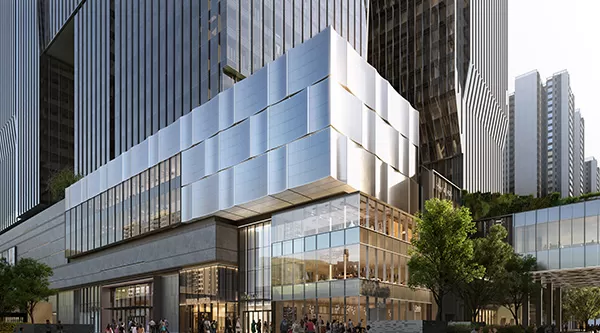
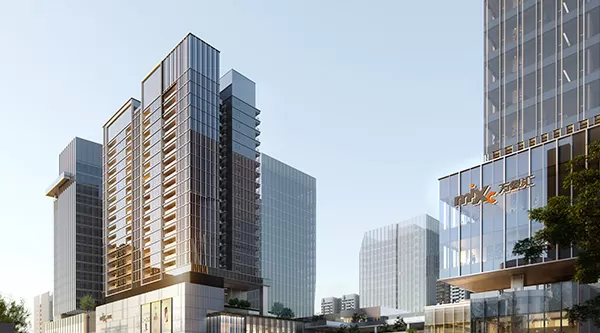
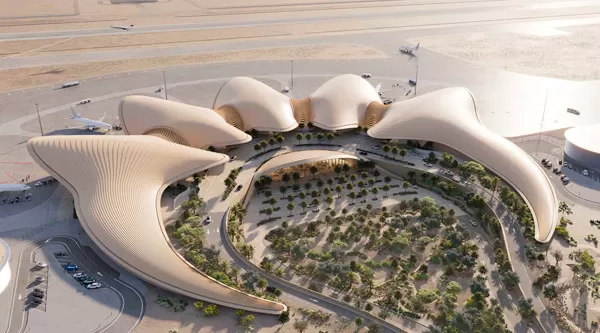
A metal facade can look perfectly flat in the morning and noticeably wavy a few hours later. The panels have not necessarily changed shape dramatically—the sun angle, viewing direction and reflected light may simply make small surface variations much easier to see.
This visible waviness is often described as oil canning. It can occur in aluminum, stainless steel and other flat metal panels, especially where the design uses wide, smooth surfaces with little visual interruption.
For architects, facade contractors and buyers, the important question is not simply “How do we eliminate oil canning?” In many metal panel systems, complete elimination cannot realistically be guaranteed. A more useful question is: where can visible waviness enter the system, and what design, fabrication and installation decisions can reduce it?
Metal surfaces act like large reflectors. A small change in surface plane can redirect light enough to create a visible bright or dark band. That is why the same wall may appear smoother from one angle and more distorted from another.
Oil canning is the visible waviness that can appear within relatively flat areas of metal panels. It is also described in industry literature as elastic buckling or stress wrinkling.
It is different from an intentionally ribbed, fluted or corrugated panel profile. With oil canning, the design may have been intended to look flat, but residual stresses or installation conditions cause slight out-of-plane movement that becomes visible under certain lighting conditions.
The Metal Construction Association technical resource on oil canning provides a detailed industry explanation covering material production, fabrication, support conditions and installation.
A panel can meet its structural requirements and still show visual waviness.
Structural performance, allowable deflection and perceived surface flatness are related topics, but they are not the same acceptance criterion.
Oil canning is often easier to notice when sunlight strikes a metal facade at a shallow angle. A smooth or glossy finish reflects light more directly, so small changes in panel plane can create stronger bands of light and shadow.
Changing sun angles can make surface waviness more or less visible during the day.
Looking along the facade rather than perpendicular to it can exaggerate reflected surface variation.
Reflective finishes often make small flatness differences easier to see than diffuse or textured finishes.
Oil canning rarely has one universal cause. Stress can enter the panel long before it reaches the building—or it can be introduced while the panel is being fixed to an uneven support frame.
Flat-rolled metal can contain residual stresses created during rolling, leveling, slitting and handling. When those stresses are released unevenly later, the sheet may not remain perfectly planar.
Fabrication changes the stress distribution within a sheet. Unequal forming, tight folds, welding, curving or local processing can create stresses that later become visible as surface distortion.
Wide, uninterrupted flat areas are visually less forgiving than narrow panels or surfaces broken by folds, reveals, ribs or perforations.
If rails, brackets or supporting members are out of plane, fixing a nominally flat panel to them can force the panel to follow the same irregular surface.
Over-tight fixing, restricted movement or uneven attachment can lock stress into the panel. Temperature changes may then make the distortion more visible.
One of the most useful concepts is the relationship between the unsupported flat width of the metal surface and its thickness.
A wider flat face provides more area in which residual stresses can become visible. Increasing material thickness can improve stiffness, but thickness alone does not guarantee a perfectly flat finished elevation.
Folded edges, panel depth, stiffener spacing, support conditions and installation restraint still matter. That is why specifying “use thicker metal” without reviewing the complete panel assembly may not solve the root cause.
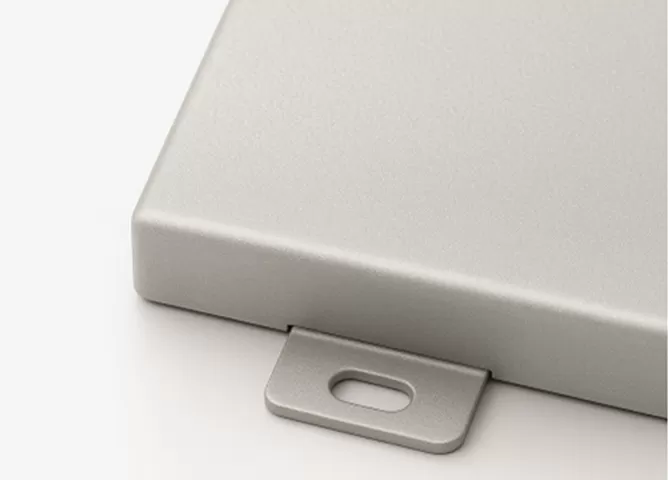
Architectural solid aluminum panels are commonly fabricated with folded returns, hangers and rear reinforcement rather than installed as completely unsupported flat sheets.
Edge depth and rear stiffening can increase rigidity, but their spacing and connection details should be coordinated with panel dimensions and support conditions.
View ALTOP Solid Aluminum Panels →Rear stiffeners are frequently used on larger solid aluminum panels to increase rigidity and control panel behavior. They are useful, but adding more stiffeners does not automatically solve every flatness problem.
Increase panel rigidity, reduce unsupported face width and help control deflection.
Compensate for every residual stress, severely uneven substrate or incorrect installation condition.
Stiffener spacing, attachment, panel thickness, folds, support locations and thermal movement.
One of the most overlooked causes of visible distortion is the supporting structure behind the panel.
If secondary rails or brackets do not establish a consistent plane, tightening the facade panels against those points may force the metal face to twist or bow. The finished facade can then reflect every inconsistency behind it.
MCA guidance on architectural wall panels specifically notes that movement or lack of planarity in supporting systems can affect finished panel flatness. View the MCA visual acceptance guidance →
Building Structure → Brackets → Secondary Rails → Panel Fixings → Visible Metal Face
Fabrication quality can be good and oil canning can still become more visible after installation. Fixing sequence, bracket adjustment and restraint all influence the final panel condition.
Pulling a panel onto an out-of-plane support can introduce visible stress into the face.
Excessive local restraint can prevent the assembly from accommodating movement as intended.
Local differences in support position can create changing panel planes across one elevation.
Metal expands and contracts as temperature changes. Connection detailing should account for the movement strategy of the selected panel system.
Two panels with similar physical flatness can look very different after finishing.
High-gloss, metallic and mirror-like surfaces produce more distinct reflections. Small changes in surface angle therefore become easier for the eye to detect. Matte, textured or visually broken surfaces often reduce the visual prominence of those reflections, although they do not physically remove panel stress.
Strong reflections can highlight small changes in plane.
Orientation and changing daylight may influence apparent color and flatness.
The pattern visually breaks up large uninterrupted reflective areas.
Not necessarily. Industry guidance generally treats oil canning primarily as a visual or aesthetic condition rather than automatic evidence of structural failure.
However, significant or persistent distortion should not simply be ignored. If the waviness is severe, localized around fixings, changes after installation or is accompanied by joint movement or other abnormal behavior, the support condition, connection design and installation should be investigated.
| Design Check | Aluminum Panels | Stainless Steel Cladding |
|---|---|---|
| Panel Proportion | Review sheet thickness, panel width, folds and rear stiffeners. | Review sheet thickness, panel width, folded geometry and support spacing. |
| Surface Appearance | Glossy and metallic coatings can increase visual sensitivity. | Mirror and highly reflective finishes can make surface variation especially visible. |
| Rear Support | Stiffeners, hangers, brackets and secondary rails should be coordinated. | Folded edges, brackets and aluminum or steel substructures should establish a consistent plane. |
| Key Lesson | Do not judge flatness by panel thickness alone. | Do not judge flatness by material grade or thickness alone. |
Product references: Architectural Aluminum Panels | Aluminum Cladding | Stainless Steel Cladding
Before assuming the material itself is defective, work through the facade in sequence.
A specification that simply says “panels shall be flat” leaves too much room for disagreement after installation. For large visually sensitive metal facades, appearance expectations should be discussed during design and sample approval.
Define the panel format: width, length, folds, returns, stiffeners and joint layout.
Define the finish: gloss, metallic effect, mirror appearance or textured surface.
Review a representative sample or mock-up: especially where large uninterrupted flat surfaces are architecturally important.
Coordinate substrate tolerances: the panel installer cannot create a visually flat elevation if the supporting plane is not properly controlled.
Agree on viewing conditions: visual acceptance should be based on documented project criteria rather than one isolated photograph taken under extreme reflected light.
Not automatically. Oil canning is a visual waviness that can occur in flat rolled metal panels for several reasons. Whether a particular appearance is acceptable should be evaluated against the project specification, approved samples and installation conditions.
No. Greater thickness can improve panel stiffness, but oil canning can also be influenced by panel width, residual stresses, forming, stiffeners, substrate flatness and installation restraint.
Properly designed stiffeners can increase panel rigidity and reduce unsupported face width. They should still be coordinated with panel dimensions, folds, attachments and the supporting frame.
Reflected light makes small changes in surface angle easier to perceive. The apparent severity can therefore change with sun angle, viewing direction and finish reflectivity.
Yes. If the support system is not sufficiently planar, attaching panels to it can introduce stress and force the visible metal face to follow an irregular support condition.
Highly reflective surfaces can make small variations in panel plane easier to see because they create stronger changes in reflected light. This makes flatness control particularly important on visually sensitive reflective cladding.
Coordinate panel proportions, thickness, edge geometry, stiffening, support tolerances, finish reflectivity and movement details early. For visually critical elevations, representative samples or mock-ups and clearly defined acceptance criteria are also useful.
Panel flatness should be reviewed together with material, geometry, finish, reinforcement, support conditions and installation details. ALTOP can coordinate project-specific metal panel fabrication based on architectural drawings and confirmed facade requirements.
Aluminum Panel Systems → Solid Aluminum Panels → Aluminum Cladding → Stainless Steel Cladding →