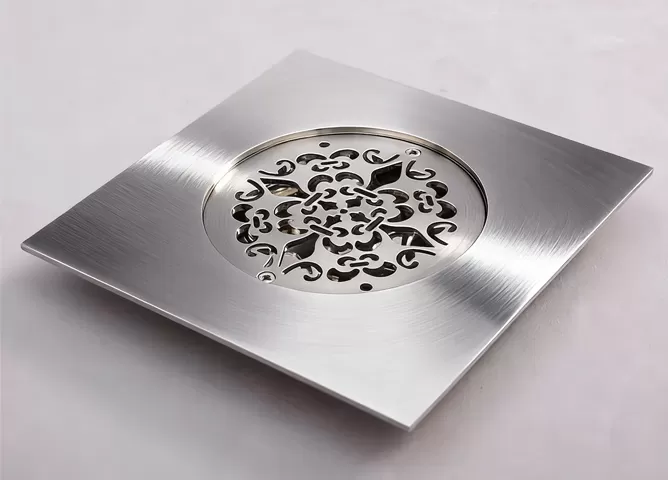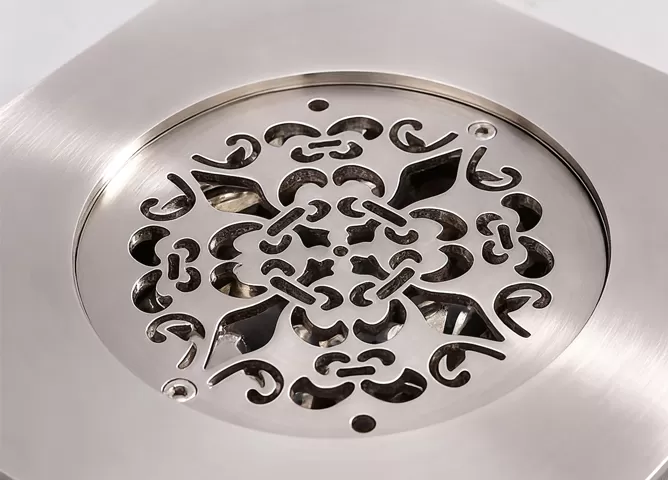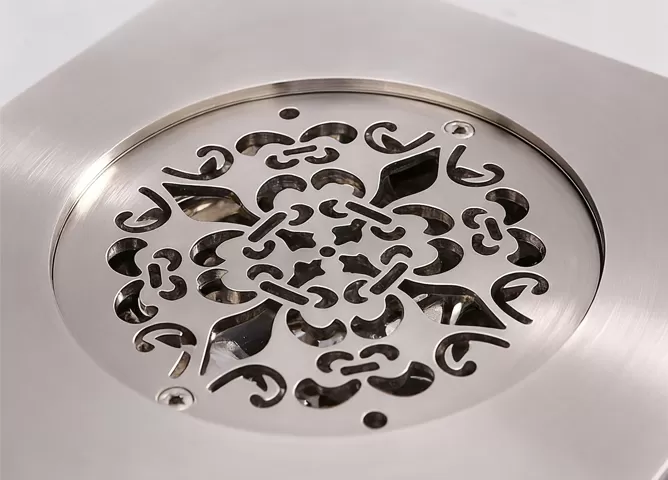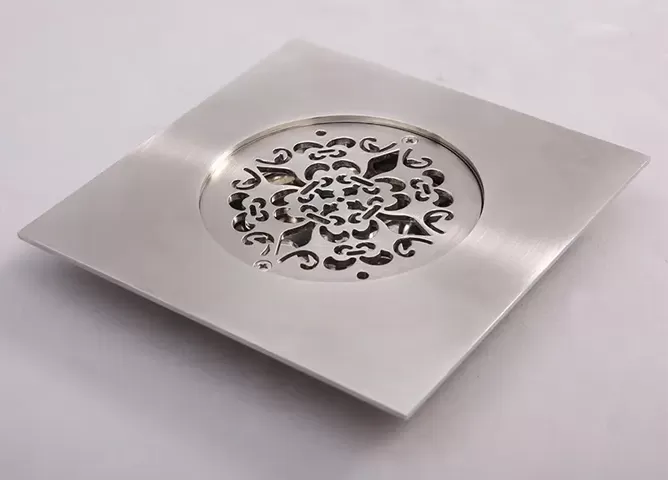
ALTOP manufactures 304 and 316 stainless steel floor drains for commercial buildings, hotels, public facilities, residential projects, and other wet-area drainage applications. Available in square, round, linear, and hidden designs, the floor drains can be customized in size, outlet diameter, surface finish, and drainage configuration to suit different floor layouts and piping conditions.
Material grade and drain structure can be selected according to the installation environment and project requirements. 304 stainless steel is suitable for many general indoor applications, while 316 stainless steel provides higher corrosion resistance for more demanding environments. Selected configurations can also incorporate a water-seal design of approximately 50 mm or more to help reduce sewer-gas and odor transmission.
ALTOP stainless steel floor drains are available in multiple material grades, drain geometries, dimensions and outlet configurations. The appropriate specification should be selected according to floor layout, drainage pipe size, corrosion environment, waterproofing detail and project requirements.
| Specification Item | Available Options | Selection Guidance |
|---|---|---|
| Material Grade | 304 Stainless Steel / 316 Stainless Steel | 304 is suitable for many general building applications, while 316 offers higher corrosion resistance and may be preferred for more demanding environments. |
| Drain Type | Square / Round / Linear / Hidden Type | Drain geometry should be coordinated with floor slope, architectural appearance, collection area and outlet position. |
| Square Drain Size | 100 × 100 mm / 150 × 150 mm / 200 × 200 mm / 300 × 300 mm | Standard reference sizes are available, with custom dimensions subject to project requirements. |
| Linear Drain Size | Length: 500–1000 mm Width: 65 / 80 / 100 mm | Length and outlet position can be coordinated with floor dimensions, drainage slope and installation layout. |
| Outlet Size | DN50 (2") / DN75 (3") / DN100 (4") | Outlet diameter should match the drainage pipe and project flow requirements. |
| Surface Finish | Brushed / Mirror / Sandblasted / Other Confirmed Finishes | Finish should be selected according to architectural appearance, cleaning requirements and surrounding floor materials. |
| Water-Seal Configuration | Reference water seal ≥50 mm on applicable trapped configurations | Water-seal depth and trap structure should be confirmed according to drain model and project requirements. |
| Customization | Size / Shape / Outlet / Finish / Drainage Configuration | Custom stainless steel floor drains can be reviewed according to drawings, installation dimensions and project specifications. |
Specification note: Final material grade, dimensions, outlet configuration, surface finish and water-seal structure should be confirmed according to the selected product and project conditions.
Material grade should be selected according to exposure conditions rather than price alone. Both 304 and 316 stainless steel can be used for drainage products, but their suitability differs in more corrosive environments.
| Selection Factor | 304 Stainless Steel | 316 Stainless Steel |
|---|---|---|
| General Corrosion Resistance | Good for many general indoor environments | Higher resistance in more demanding environments |
| Chloride Exposure | More limited resistance | Better suited to higher chloride exposure |
| Typical Environment | Bathrooms, commercial washrooms and general wet areas | Coastal, humid or more corrosive project environments |
| Cost | Generally lower | Generally higher |
| Main Selection Priority | General-purpose project use | Higher corrosion-resistance requirement |
Selection tip: Consider humidity, chloride exposure, cleaning chemicals and project specifications before deciding between 304 and 316 stainless steel.
Drain geometry affects water collection, floor slope, visual appearance and installation layout. The best type depends on how water is expected to reach the drain and how visible the drainage element should be.
A practical choice for tiled floors and localized point drainage. Square covers can coordinate easily with common tile grids and floor layouts.
Suitable where a round top design is preferred or where the drainage layout is coordinated around a circular outlet and compact collection point.
A linear drain provides a longer water-collection edge and can simplify floor slope planning in larger wet areas, shower zones and architectural floor layouts.
Hidden designs reduce the visual presence of the drain and can be considered where floor-material continuity and architectural appearance are important.
Do not choose by appearance alone. Floor slope, waterproofing detail, outlet position, maintenance access and required drainage capacity should be reviewed together.
Square drain sizes such as 100 × 100 mm, 150 × 150 mm, 200 × 200 mm and 300 × 300 mm should be coordinated with floor area, tiles and visual proportions.
Linear drain length influences how the floor can be graded toward the drainage line and should be coordinated with waterproofing and tile layout.
DN50, DN75 and DN100 outlet options should be selected according to the connected pipework and project drainage requirements.
A larger drain cover or larger outlet does not automatically guarantee better drainage. Internal flow path, floor slope, pipe diameter, pipe gradient and downstream drainage design all influence actual performance.
Floor drain performance depends on more than the visible cover. The cover, drain body, filtering components, trap or water seal, outlet and waterproof interface must work together.
Forms the visible drainage surface and allows water to enter while influencing appearance, opening size and maintenance access.
Receives water from the cover and directs it toward the outlet connection and drainage pipe.
Where included in the selected design, a removable strainer can help intercept debris before it enters the drainage pipe.
Applicable trapped configurations retain water to create a barrier between the occupied space and the drainage pipe.
Connects the floor drain to DN50, DN75 or DN100 drainage pipework according to the selected specification.
The interface between the drain body and surrounding floor waterproofing should be coordinated carefully to reduce leakage risk.
On applicable trapped floor drain configurations, a retained water seal creates a physical barrier between the occupied room and the drainage pipe.
Surface water passes through the drain cover.
Wastewater flows toward the connected drainage pipe.
A controlled quantity remains in the trap.
The water barrier helps limit sewer-gas transmission back into the room.
Important: A water seal only works while sufficient water remains in the trap. In infrequently used areas, drainage design and maintenance should account for possible water-seal evaporation.
Hair, dirt and other debris can restrict openings and reduce drainage efficiency if allowed to accumulate.
Mild or neutral cleaning products are generally preferable for routine stainless steel cleaning. Avoid unnecessarily aggressive chemicals that may attack the surface.
Check strainers, slots and outlet areas so sediment does not interfere with water flow.
Where a trapped drain is used infrequently, inspect the water seal periodically to help maintain the intended odor barrier.
Stainless steel floor drains can be used across different building environments when the material grade, drainage configuration and installation details are properly selected.
Commercial Buildings: washrooms, utility rooms and other wet-area drainage locations.
Hotels & Hospitality: guest bathrooms, public wash areas and selected service spaces.
Residential Projects: bathrooms, balconies and other specified drainage areas.
Public Facilities: wet areas requiring durable and maintainable floor drainage components.
Utility & Service Areas: project-specific drainage locations where stainless steel is suitable for the exposure conditions.
Coastal or More Corrosive Projects: 316 stainless steel may be considered where chloride-related exposure is a significant design factor.
ALTOP can coordinate stainless steel floor drain specifications according to project dimensions, material requirements and drainage conditions. A custom project normally begins by defining the key product variables below.
304 or 316 stainless steel.
Square, round, linear or hidden type.
Top dimensions, linear length and outlet diameter.
Brushed, mirror or other confirmed project finish.
Confirm dimensions and installation requirements.
Produce and check according to confirmed project specifications.
Explore more architectural stainless steel products →
Providing the following information helps clarify the required floor drain configuration and reduces unnecessary revisions during quotation.
Neither grade is universally better. 304 is suitable for many normal indoor applications, while 316 is often preferred where higher chloride exposure or a more corrosive environment requires additional corrosion resistance.
A square drain usually collects water at one localized point, while a linear drain creates a longer collection edge. The choice influences floor slope, tile layout, visual appearance and installation arrangement.
The outlet should match the connected drainage pipe and project flow requirements. The appropriate diameter should be coordinated with pipe slope, expected drainage demand and downstream system design.
A trapped floor drain retains a quantity of water that creates a physical barrier between indoor air and the drainage pipe, helping limit the passage of sewer gases when the seal is maintained.
Yes. Depending on project requirements and production feasibility, dimensions, drain geometry, outlet size, outlet position and surface finish can be coordinated according to drawings or dimensional information.
A hidden floor drain is designed to reduce the visual presence of the drainage opening and better integrate the drain into the surrounding floor finish while maintaining access for drainage and maintenance.
Useful information includes material grade, drain type, dimensions, outlet diameter, surface finish, water-seal requirement, quantity, project location and any available drawings or reference samples.
Premium Stainless Steel Material
Made of 304/316 stainless steel with strong corrosion resistance and long service life.
Efficient Drainage & Anti-Clogging
Scientifically arranged drainage holes ensure strong flow and effectively intercept debris.
Dual Anti-Odor & Insect Prevention
Combines water seal (depth ≥50mm) with sealing ring to effectively block odors and pests.
Aesthetic & Easy-Clean Surface
Brushed or polished surface is aesthetically pleasing and easy to clean and maintain.
Easy & Secure Installation
Threaded and other connection designs for easy installation, secure connection, and good sealing.
High Load-Bearing & Durability
High stainless steel strength withstands daily tread and heavy pressure, resisting deformation.