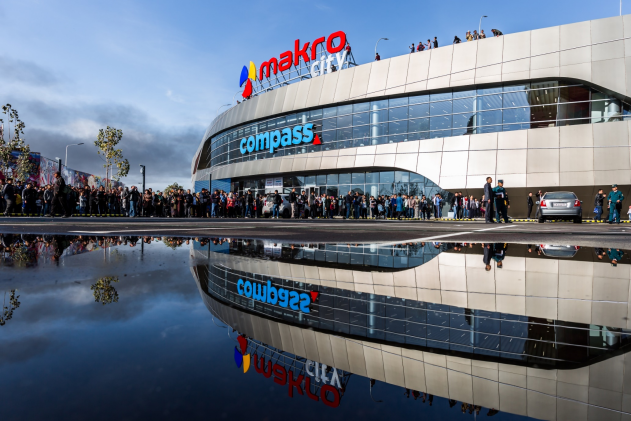
A glass curtain wall is a non-load-bearing exterior façade system attached to a building’s structural frame. It is designed to resist environmental forces such as wind load, rain, and air pressure while allowing maximum daylight penetration into interior spaces.
Unlike traditional masonry walls, curtain walls do not carry structural loads from the building itself. Instead, they function as an external “skin” that defines the building envelope.
In modern architecture, glass curtain walls are widely used in commercial towers, airports, and institutional buildings due to their transparency and lightweight characteristics. However, achieving high aesthetic value must be balanced with thermal efficiency, acoustic comfort, and structural safety.
This balance is the core principle of performance-driven glass curtain wall design.
While full glass façades create visually striking architecture, they also introduce engineering challenges related to energy transfer and environmental control.
Key challenges include:
Higher heat gain in summer and heat loss in winter
Increased noise transmission in urban environments
Wind-induced structural movement in high-rise buildings
Risk of condensation and thermal bridging
According to building envelope principles, façade systems are a critical barrier between indoor conditioned space and external climate conditions.
Therefore, modern façade engineering must treat curtain walls as integrated performance systems rather than decorative surfaces.
Thermal control is the most critical aspect of modern curtain wall engineering.
| Climate Zone | U-Value Target (W/㎡·K) | SHGC Range |
|---|---|---|
| Cold climates | ≤ 1.2 | 0.25–0.35 |
| Moderate climates | ≤ 1.6 | 0.30–0.40 |
| Hot climates | ≤ 2.0 | 0.20–0.30 |
Low-E coatings (single / double / triple silver)
Argon or krypton gas insulation
Thermal break aluminum framing systems
According to ASHRAE Handbook – Fundamentals, glazing systems significantly influence HVAC load and building energy consumption.
Urban buildings require façade systems that reduce external noise transmission.
Office buildings: ≥ 35 dB
Hotels/residential: ≥ 40 dB
High-density urban zones: ≥ 45 dB
Laminated glass with PVB or SGP interlayers
Asymmetric glass thickness design
Enlarged air cavity spacing
ISO acoustic testing standards define sound insulation using weighted sound reduction index (Rw), which is widely used in façade performance evaluation.
Curtain wall systems must withstand dynamic environmental loads, especially in high-rise buildings.
Key engineering requirements include:
Wind pressure resistance (2.0–3.5 kPa typical for tall buildings)
Inter-story drift accommodation (≥15 mm)
Controlled deflection under wind load
Finite element analysis (FEA) is commonly used to simulate stress distribution and deformation behavior.
According to CIBSE structural façade guidance, façade anchoring systems must allow controlled movement without compromising sealing performance.
Different façade systems provide different levels of performance, cost, and installation efficiency.
| System Type | Description | Performance Benefit | Limitation |
|---|---|---|---|
| Stick system | Site-assembled | Flexible design | Lower precision |
| Semi-unitized | Hybrid system | Balanced performance | Medium efficiency |
| Unitized system | Factory-prefabricated | High precision + speed | Higher upfront cost |
Among these, unitized glass curtain wall systems are widely used in high-rise construction due to their factory-controlled quality and faster installation process.
Modern façade engineering treats curtain walls as part of building facade systems, where thermal, acoustic, and structural behaviors are analyzed together.
Integrated design includes:
Energy simulation for heat transfer
Acoustic modeling for noise reduction
Structural simulation for wind response
This ensures that all performance parameters are optimized simultaneously rather than independently.
Glass selection plays a central role in façade performance:
Double or triple glazing improves thermal insulation
Laminated interlayers enhance safety and acoustic control
Selective coatings reduce solar heat gain
Spacer materials and edge sealing systems also significantly influence condensation resistance and long-term durability.
Even high-performance materials can fail if installation is not properly executed. Key installation factors include:
Tight tolerance control (typically ±2 mm for unitized systems)
Continuous sealing to prevent air leakage
Proper thermal break placement at anchoring points
Factory prefabrication for consistency
In global supply chains, high-quality curtain wall china manufacturing is often associated with large-scale prefabrication capability and standardized production processes.
Curtain wall engineering often involves balancing conflicting requirements:
| Conflict | Engineering Challenge | Optimization Strategy |
|---|---|---|
| Transparency vs insulation | More glass increases heat transfer | Low-E coated insulated glazing |
| Acoustic vs weight | Thicker glass improves sound insulation | Asymmetric laminated glass |
| Cost vs performance | High-performance materials increase cost | Zonal façade optimization |
| Structural strength vs flexibility | Rigid systems resist wind better | Flexible anchoring systems |
The objective is not to maximize a single parameter, but to achieve system-level balance.
.
A typical performance-driven façade project follows these steps:
1. Architectural concept development
2. Preliminary curtain wall system selection
3. Thermal and acoustic simulation
4. Structural load analysis
5. Prototype mock-up testing
6. Final engineering optimization
7. Fabrication of façade components
8. On-site installation of glass curtain wall design system
9. Performance verification testing
This iterative process ensures that design intent is validated through engineering analysis and real-world testing.
According to building envelope research, façade systems can significantly influence total building energy consumption.
Well-designed curtain wall systems can:
Reduce HVAC energy demand
Improve indoor thermal comfort
Enhance acoustic environment
Extend building lifecycle performance
In many modern projects, optimized façade systems can contribute to 20–40% energy reduction compared to conventional glazing systems.
Performance-driven glass curtain wall design integrates energy efficiency, acoustic comfort, and structural safety into a unified engineering framework. By combining advanced materials, system-level simulation, and precise installation methods, modern façade systems achieve both architectural transparency and measurable performance. This approach ensures that glass curtain walls are not only visually appealing but also technically optimized for long-term building performance.
1. What is a glass curtain wall?
A glass curtain wall is a non-load-bearing exterior façade system that protects buildings from environmental conditions while allowing natural light penetration.
2. What is the main advantage of unitized curtain wall systems?
They offer higher quality control, faster installation, and better performance consistency compared to site-assembled systems.
3. How do curtain walls improve energy efficiency?
Through Low-E coatings, insulated glazing units, and thermal break systems that reduce heat transfer.
4. What standards are used in curtain wall design?
ASHRAE, ISO, CIBSE, and LEED frameworks are commonly referenced.
5. What is the biggest challenge in curtain wall design?
Balancing transparency with thermal, acoustic, and structural performance requirements.
1. Wikipedia – Curtain wall (architecture)
https://en.wikipedia.org/wiki/Curtain_wall_(architecture)
2. Wikipedia – Building envelope
https://en.wikipedia.org/wiki/Building_envelope
3. ASHRAE – Building Envelope & Energy Standards
4. ISO Standards Overview (Acoustics & Thermal Testing)
https://www.iso.org